



British writer Maria Dziedzan, daughter of a Welsh mother and Ukrainian father has penned three novels in her powerful and memorable My Lost Country series. Each is a stand-alone story. Several characters are carried through the books, and the three stories are woven together into a single, broad tapestry. The characters are united by the historical events of WW2, the violent brutality of occupation, the inhumanity of Nazi slave labour,
Bolshevik terror, displaced persons camps, the refugee experience and ultimately the triumph of survival in enslaved Ukraine or thriving in a new homeland.
The three books are beautifully, eloquently written. Page after page, there are rich descriptions of memorable places and relatable emotions the reader cannot help but feel. They are packed with unforgettable, compelling characters, most of whom can easily be characterized as heroes by the way they fight for survival against incomprehensible odds, for their courageous spirits despite looking evil in the eye and their commitment not to descend into the depraved world that engulfs them.
For readers whose parents or grandparents were coerced into slave labour or otherwise forced to flee their Ukrainian homeland because of Nazi and Russian aggression, the stories will feel familiar. The author shines light on the deeply painful experiences her characters faced, all of which were felt in one way or another by virtually every victim of WW2 who found themselves far from home, stateless in western Europe and uncertain of where they will end up.
The books are self-published and available on Amazon as paperback books and Kindle eBooks.
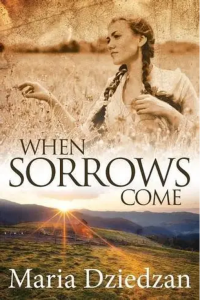
When Sorrows, 2014. This first novel in series won The Big Bingham Book Read in 2015 and was one of four finalists for the Historical Novel Society Indie Award 2016 . The story starts with a dramatic, fast-passed chapter that leaves the reader breathless. The family of a young woman, Anna, is ripped apart when the Soviets occupy western Ukraine. She must find a way to survive and save her grieving mother. Once the Nazis displace the Soviets there is a momentary sense of relief, after all they are Christian as opposed to the Godless communists from the east. However, the relief is immediately fleeting. The Nazis prove to be as ruthless as their rivals. The brutality she witnesses fuels her keen sense of justice and commitment to help those fighting the dual aggressors murdering her people and exploiting her land.
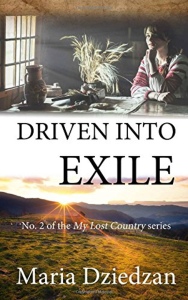
Driven into Exile, 2017. The second novel in the series, follows the challenges of Natalya, a young woman who clandestinely helped the Ukrainian partisans battling both the Nazis and the Russians . The story begins in 1990 England where Natalya’s English born adult daughters, their English husbands and families gather for her funeral. They discover much about their mother that she never shared with them. Natalya does not want to abandon her family but supporting the partisans has put them all in grave danger. Fearfully but valiantly, she decides on a course of action that hopefully, will protect her younger sisters and widowed mother. Natalya relies on her training with the partisans, her wits and strong moral compass to carry her through what she believes will be a temporary absence from her beloved village. As the war progresses, new trials are faced. Natalya is not oblivious to the horrors of nazi enslavement but understands that sometimes, simple human kindness is better than vengeance.
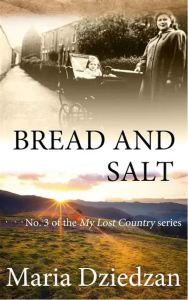
Bread and Salt, 2018. The third novel in the series jumps back to 1947. Readers are reacquainting with the family Natalya left behind and the extreme trials they endured since the Iron Curtain dropped. NKVD henchmen dominate everyone, terrorizing the civilian population into submission. A window is opened to the tremendous challenges confronting those trapped in Soviet Ukraine. Suspicion, jealousy and poverty turn neighbour against neighbour, everyone looking over the shoulder, careful not to do or say anything that might raise the ire of the local NKVD.
The sisters experience terrifying events, surviving thanks to their indominable spirits and commitment to each other. They share a bond of love and stand united by their shared sense of responsibility. Across the continent, Natalya struggles to accept that she will not return home and must start a new life, experiencing difficulties and discrimination not unlike most post World War 2 refugees. There is no Hollywood happy ending here, but the story concludes with a sense of pride in having done the right thing and doing what had to be done to survive. The English born family reconnects with their aunties in Ukraine for the homecoming their late mother had dreamt of but was never able to make. The title of this volume Bread and Salt is a symbolic tribute to the age-old tradition of a bread and salt greeting.
Dziedzan, an educator, has done her homework to ensure historical accuracy, constructing a strong factual foundation for her story telling. She dissects how political violence shapes and influences everything. She states documented historic facts providing insights into a difficult and complex period of Ukrainian history within the context of WW2.
The characters in the novels are multilayered and fascinating, grounded in strong values that carry them through difficult times. The stories explore numerous universal themes, made more complex by war and political aggression. The characters demonstrate the difference between good and evil, the meaning of family, the value of freedom and friendship, and choosing to survive rather than sinking into despair and hopelessness. They show that courage can be quiet and is not the absence of fear.
The author provides useful historical notes at the end of each book, delivering additional clarity about a catastrophic period of 20th century history. These books are extremely well written, with heartrending stories that humanize political upheavals. These stories are especially poignant given the 21st century existential struggle of the Ukrainian Nation.
Lidia Wasylyn