



The Exhibit Brings History to Life and Celebrates a Prairie Legacy
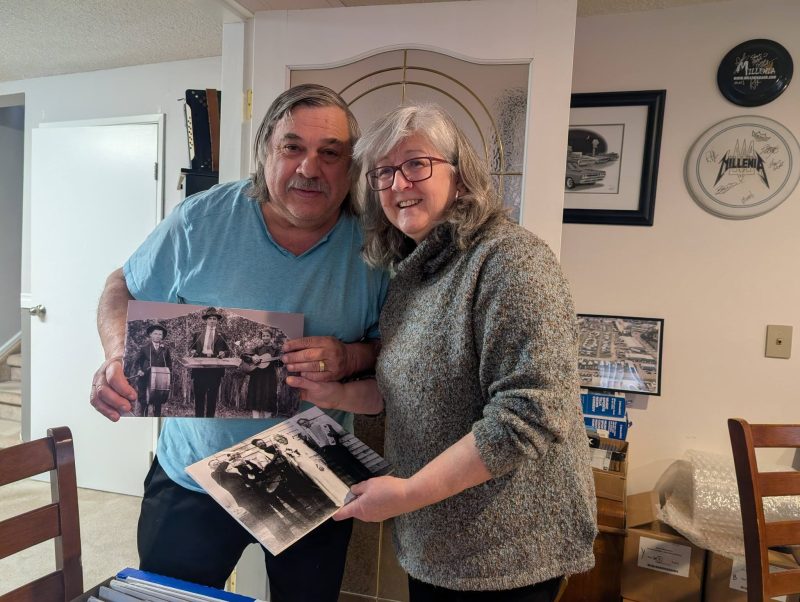
The Ukrainian-Canadian community of Western Canada is about to experience a celebration of its vibrant musical heritage with the upcoming exhibit, “Ukrainian Music on the Prairies: The Vinyl Era,” at the Alberta Council for the Ukrainian Arts (ACUA) in Edmonton. This immersive exhibition will bring to life the rich sounds, stories, and rhythms that have shaped Ukrainian communities across the Canadian Prairies, from Alberta to Saskatchewan and Manitoba. Homin Ukrainy recently spoke with Dr. Brian Cherwick, renowned musician, ethnomusicologist, and founding member of the acclaimed ensemble Kubasonics, as well as Dr. Larisa Sembaliuk Cheladyn, former Kule Chair of Ukrainian Ethnography at the University of Alberta, distinguished visual artist and folklorist, about the inspiration, challenges, and enduring legacy of this remarkable project.
Designed as a modular, travelling exhibit, “Ukrainian Music on the Prairies: The Vinyl Era” showcases photographs of musicians, concert posters, vinyl record jackets, and instruments from accordions and violins to tsymbals (hammer dulcimer) as well as old microphones and record players. To enrich the experience, several QR codes will let visitors listen to historic recordings spanning decades, adding an auditory dimension to the visual display. As the exhibit moves from community to community, each location will bring its local flavour, own stories, personal collections, and historical artifacts, ensuring that every stop offers a unique and deeply personal encounter with the music that has shaped the Ukrainian-Canadian experience.
Inspiration Rooted in
Community
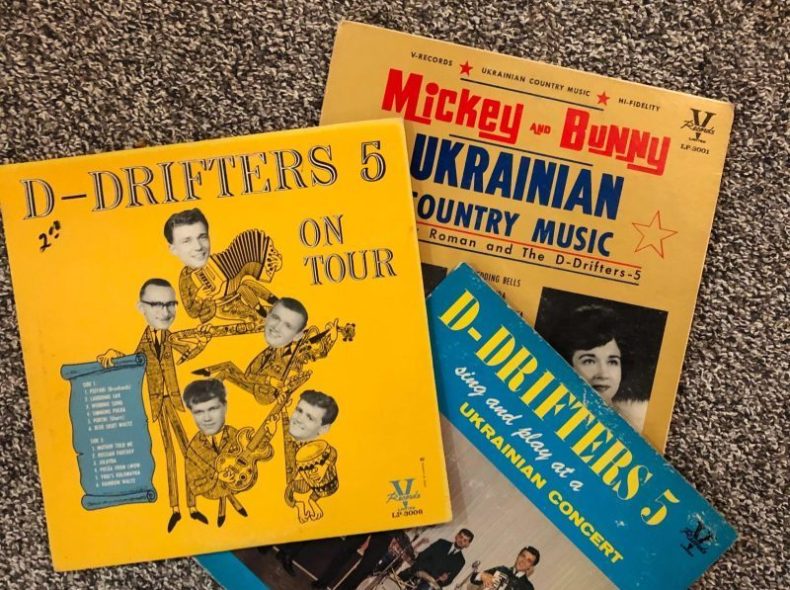
For Brian and Larisa, the project grew from a lifetime of personal connection to Ukrainian music. Exposure to music from childhood at family gatherings, weddings, and community events filled with the vibrant sounds shaped their lives. Over decades, Brian collected vinyl records, concert posters, and memorabilia, drawing inspiration for the exhibit from his experiences as a musician, academic interests and his family’s rich musical lineage. He recalls that his father had sixty cousins and a family band that performed at weddings, weaving music into the very fabric of family and community life. This was more than entertainment, it was the heartbeat of enduring cultural traditions. Brian’s uncle was the drummer for the D-Drifters-5, a Ukrainian-Canadian ensemble from Winnipeg active in the 1960s and beyond. The band adapted popular country and English hits into Ukrainian lyrics, performing in the “half-na-piv” style, and in 1965 even recorded VLP 3025: The D-Drifters-5 Sing and Play Beatles Songs and Other Top English Hits in Ukrainian.
Larisa shared that, although her family were not professional musicians, they contributed to the life of their community in other ways as caterers. She recalls working at 12-14 weddings a year and hearing Ukrainian music that filled the halls. After dinner, even the catering staff would take off their aprons and join in dancing, polkas and two-steps blending seamlessly with the melodies. Raised in the rich tradition of live Ukrainian music, has left them with both a lasting sense of nostalgia and a strong calling to ensure that the artistry of past generations continues to inspire today’s youth. Therefore, this exhibit is about honouring that creativity, about preserving these stories so they don’t fade.
Bruce Yakoweshen’s book Remembering Our Many Ukrainian Bands and Musicians, which documented 137 bands through 619 photographs, provided some photos; however, the organizers wanted to go even further, creating a more immersive experience. The exhibit’s broader curatorial vision was developed from Brian’s earlier museum exhibit on Ukrainian musical instruments at the Ukrainian Cultural Heritage Village in Alberta, as well as a presentation and musical performance for ACUA two years ago. Following that presentation, the leadership of the ACUA approached Brian and Larisa with the idea of developing this new exhibition, which now offers audiences a deeper exploration of Ukrainian musical heritage. In putting this new exhibit together and conducting their research, they drew on materials from the Bohdan Medwidsky Ukrainian Folklore Archives at the University of Alberta, the Basilian Fathers Museum in Mundare, Alberta, the museum in St. Paul, Alberta, the Ukrainian Musicians Association, and personal collections from the Gargus, Hrycyk, Skubleny, and Wowk families. Because many early bands existed before the era of commercial LP records, personal photographs, record jackets, instruments, and family stories became invaluable pieces of the puzzle, bringing these musical legacies vividly to life.
Celebrating a Living Tradition
Curating an exhibit spanning the Prairies presented both challenges and joys. Larisa noted the difficulty in ensuring balanced representation from Alberta, Saskatchewan, and Manitoba, especially for a touring exhibit. Yet the rewards were profound, with every province offering local performances shaped by its own distinct musical styles, blending traditional polkas with modern influences, such as English-Ukrainian hybrid songs or Beatles adaptations.
The exhibit highlights a number of iconic recordings, including the opening theme of the long-running CFCW radio program, which featured the polka “Early Bird of Spring” (1955). Generations of Ukrainian Canadians grew up listening to beloved performers such as Mickey and Bunny, who became known for translating popular English-language hits into Ukrainian. Brian also noted that their Ukrainian version of Woody Guthrie’s “This Land Is Your Land” sold more than 60,000 copies, with proceeds helping to fund the production and recording of additional music. Many of these early recordings were created in remarkably modest settings, often at radio stations using a single microphone, and later in home recording studios. Popular radio hosts, Henry Smichura and Dan Chomlak, frequently invited Ukrainian bands to perform live on their programs, and helped produce early recordings. While many of those radio programs are around the recording companies no longer exist, making the surviving records, memories, and artifacts all the more precious.
Larisa added that Columbia Music initially recorded Ukrainian-American music by Pavlo Humaniuk in the United States during the 1920s to promote the sale of their record players, often absorbing the cost of the recordings. This trend, Brian noted, did not reach Canada until the 1950s.
Stories That Transcend Time
Memorable anecdotes bring the exhibit to life. Brian recalls a conversation with an Indigenous woman from northern Alberta who shared that, as a child, she believed the word “music” referred to Ukrainian music, because it was the only kind she heard aside from traditional Indigenous music. Larisa reflects that in rural Alberta, music was not only a form of celebration, as it was also woven into the rhythms of daily life on farms and in homes, sustaining cultural identity across generations. Farmers would even install radios in their sheds to catch every note of the radio programs, ensuring that the music became part of their work, their family, and their community.
Both Brian and Larisa hope the exhibit will inspire visitors, especially the new wave of Ukrainians arriving in Canada. As Brian explains, “We want the visitors to see that Ukrainians in Canada didn’t sit still, they worked tirelessly to preserve their traditions, creating, innovating, and building networks to share their culture.” Larisa adds, “I hope that “Ukrainian Music on the Prairies: The Vinyl Era” instills a deep appreciation for live music and its central role in shaping Ukrainian-Canadian heritage, honouring the traditions brought from Western Ukraine.”
Co-presented by The Dmytruk Capital Fund at the Edmonton Community Foundation, Friends of the Ukrainian Folklore Centre, and the Alberta Council for the Ukrainian Arts, the exhibit will be unveiled on Saturday, April 25, with a special performance by Kubasonics, whose vibrant sound beautifully bridges tradition and contemporary expression. Following its closing on Saturday, May 23 “Ukrainian Music on the Prairies: The Vinyl Era” will be a travelling exhibit, inviting communities to share treasured artifacts and family memories from their own collections. Through photographs, instruments, and historic sound recordings, this exhibit honours the resilience, creativity, and enduring spirit of Ukrainian Canadians, celebrating a musical heritage that continues to resonate across generations and inspire the cultural landscape of Canada today.
Nadia Gereliouk