


In the 21st century, Russia’s war against Ukraine in its open format began in 2014, with the occupation of Crimea and the onset of Russia-backed armed conflict in the eastern part of the country.
The full-scale Russian invasion of Ukraine, referred to by Vladimir Putin as a “special military operation,” began on February 24, 2022, and has now entered its fifth bloody year.
During that period of Russia’s open war against Ukraine, and Ukrainians successfully beating back the aggressor to defend their country, the world has finally and for the first time in Ukraine’s modern history recognized the fundamental reality: Ukraine is not Russia. Through immense sacrifice and loss, the Ukrainian people have earned their rightful and long deserved place on the international stage as a full-fledged nation and sovereign state, recognized as such by the international community.
Ukraine as an epicentre of contemporary history and international politics has been strategically envisioned decades ago by the renowned Ukrainian poet Vasyl Symonenko, who was persecuted by the Soviet regime, and Yaroslav Stetsko, who headed the Ukrainian government proclaimed in 1941, although it was short-lived and suppressed by Nazi Germany. Both articulated, in different periods, ideas about Ukraine’s struggle for independence and its significance to world affairs:
“Ukraine – thou art a prayer of mine,
Thou art my desperation everlasting…
A battle fiercely rages the world over
For thy life and thy right to be.”
(V. Symonenko, The Shore
of Expectations, 1962)
“Ukraine in its struggle with the Moscow-communist oppressors is no longer forlorn. A worldwide front of anti-Moscow and anti-communist forces is taking shape and making its way across all nations.”
(Y. Stetsko, Kyiv’s Ideals – In a Prevailing Advance, 1967)
“Ukraine – A Cornerstone of World Politics.”
(Y. Stetsko, A Somewhat Forgotten Superpower, 1972)
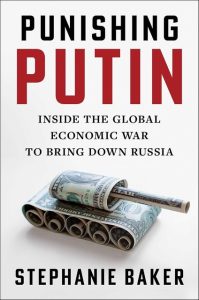
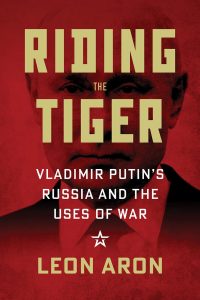
The full-scale invasion has also generated unprecedented global interest in Ukraine. This renewed attention is reflected in a growing body of publications, including books, monographs, journals, news magazines and other media devoted to Ukrainian history, politics, the armed forces, culture, literature, music, opera, visual and performing arts, film, sport, science and technology, archaeology, social studies, education, architecture, nature and cuisine – Ukraine’s civilizational environment.
All of this, in turn, has contributed to a broader understanding of Ukraine and its historical and contemporary development, while also shaping public opinion about this nation, as well as its historically perennial adversary.
Supporting Data: 2014–2022–2026
Since the Revolution of Dignity in 2014, and particularly following Russia’s full-scale invasion in 2022, international interest in Ukraine has “reawakened” and expanded substantially. This is reflected in a growing body of books, academic research, journalism, documentary films and other media examining Ukraine’s history, politics, culture and contemporary experience of war.
Published Books: More Than 200
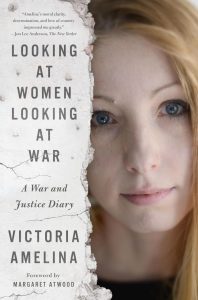
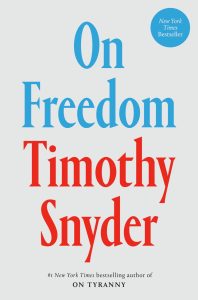
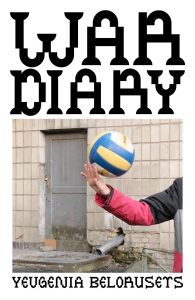
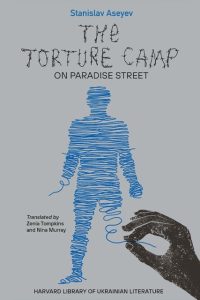
More than 200 books have been identified, including more than 100 focused on Russia’s war against Ukraine and approximately 100 addressing Ukrainian history, politics, and cultural and civilizational development.
Ukraine has also established a translation-support program through the Ukrainian Book Institute to facilitate the translation of Ukrainian books into foreign languages and their distribution internationally. A significant share of this international publishing is in English, the principal lingua franca of global academic, political and media discourse. Many works originally published in Ukrainian and other languages have subsequently been translated into English.
Journals and News Magazines
Major international publications that have devoted substantial coverage to Ukraine include The Economist, Foreign Affairs, The Guardian Weekly, New Eastern Europe, Newsweek, The New Yorker, The New York Times Magazine, Opera, Opera News and Time.
Together with other publications, these outlets have produced more than 100 issues, special reports and major features addressing Russia’s war against Ukraine and related historical, political and cultural subjects.
One notable example is Constant Méheut’s December 5, 2024, New York Times feature, “Jolted by War, Ukrainians Are Reclaiming Their Literary Heritage: ‘Executed Renaissance.’” The article examined the generation of Ukrainian writers, poets, artists and other cultural figures whose lives and work were devastated by Soviet repression in the 1930s. Its publication reflects not only renewed international attention to Ukraine’s cultural history, but the first example of a major world publication accurately addressing a century-old crime committed by a Stalinist Soviet Russia. As Putin’s genocidal Russia once again aims at “erasing” Ukraine, the past tragedy of the Executed Renaissance finds a poignant resonance today. and the continuing importance of preserving that heritage.
Documentary Films and News Reports
Major international broadcasters and media organizations, including the BBC, CBC, CBS, CNN, CTV, PBS and TVO, have produced documentaries, investigative reports and other programming on Ukraine.
Notable examples include Donetsk Airport, 20 Days in Mariupol, Ukraine: Growing Up Under Fire, Number 17: My House of Horror (Vuhledar), Bucha, Beethoven’s 9: Ode to Humanity, Putin’s End Game: The Stakes Beyond Ukraine by the Atlantic Council, and 2000 Meters to Andriivka.
This expanding body of work has been produced by historians, political scientists, journalists, diplomats, writers, artists, filmmakers, eyewitnesses and survivors and disseminated through established publishing houses, academic institutions and major international media organizations.
Ukraine’s Growing International Profile
Ukraine prevailed over Russia in the realm of world public opinion, which resulted in tangible political, military and humanitarian support. The volume and breadth of this material document a significant expansion of international research and public discussion about Ukraine. It has contributed to greater awareness of the country’s history, culture, national identity and political development, while documenting the human and geopolitical consequences of Russia’s war.
Ukraine’s sustained resistance has also generated substantial political, military and humanitarian support from democratic partners. At the same time, Russia’s use of what are commonly described as “active measures” — including sabotage, assassinations, cyberattacks, political interference, and misinformation and disinformation campaigns — has raised broader concerns about the security of democratic states and the international system.
The war has further challenged Moscow’s longstanding portrayal of Russians and Ukrainians as a “single people” or “brotherly nations.” Ukraine’s distinct national identity, sovereignty and political trajectory have become increasingly prominent in international discourse.
Former Ukrainian President Leonid Kuchma articulated this distinction in his 2003 book Ukraine Is Not Russia, republished in 2023. Decades earlier, Yaroslav Stetsko described Ukraine as a “cornerstone of world politics.” President Volodymyr Zelensky expressed the urgency of Ukraine’s position in his February 2022 statement: “The fight is here. I need ammunition – not a ride.”
The full bibliography will be made available through a digital resource for convenient access and continued reference at www.ucrainica.ca. Homin Ukrainy will offer a curated selection of recommended further reading.
ACKNOWLEDGEMENTS
Deserved thanks are due to my wife, Anna Bolubash, for her meticulous assistance in researching and acquiring the materials included in this bibliography; Myhajlo Hucman for patiently assembling the bibliography from index cards in preparation for publication; Orest Steciw and Borys Mykhailets for their proactive support of this “Project Facts” megaproject; the UCRAINICA Research Institute and the League of Ukrainian Canadians for initiating and directing this ongoing unique undertaking; and Buduchnist Credit Union and the BCU Foundation for their generous financial support.
May this project contribute to a deeper understanding of Ukraine and strengthen our collective commitment to defending its freedom, independence and sovereignty.
Oleh Romanyschyn, Ph.D.
Director of Research and Publishing
UCRAINICA Research Institute