



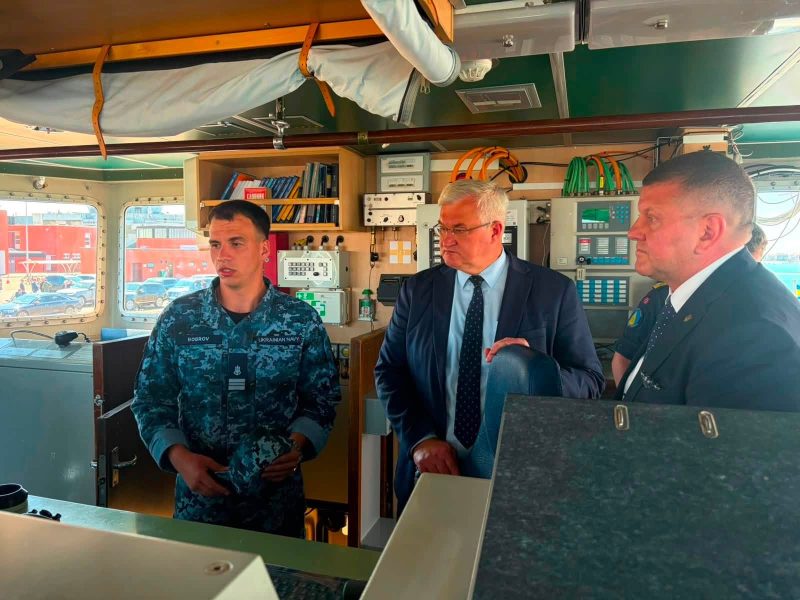
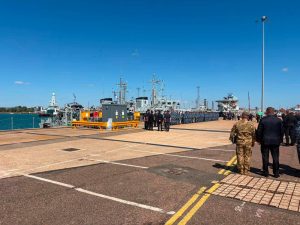
 While Russia’s leadership continues to showcase propaganda images and staged displays of military power, Ukrainian sailors are undergoing training in the United Kingdom aboard real vessels that will become part of Ukraine’s future naval capabilities. As part of President Volodymyr Zelenskyy’s delegation visit to the UK, Ukrainian representatives observed naval training exercises involving Ukrainian personnel aboard a minehunter previously transferred by the Royal Netherlands Navy. The vessel, now serving under the Ukrainian flag, has been symbolically renamed “Melitopol” — honouring the Ukrainian city temporarily occupied by Russia.
Docked alongside it is another important addition to Ukraine’s emerging naval fleet — the “Mariupol,” a minehunter formerly operated by the Belgian Navy. The names of both vessels carry profound significance, representing Ukrainian cities that have become symbols of resilience and the ongoing struggle for sovereignty. The training of Ukrainian sailors reflects not only military assistance from allies, but also a partnership based on shared experience and expertise. Ukrainian personnel are gaining access to advanced naval technologies, modern operational methods, and NATO-standard approaches to maritime security. At the same time, Ukraine’s allies continue to learn from the experience of Ukrainian forces, who have developed innovative tactics and battlefield solutions during Russia’s full-scale war.
Ukraine’s military cooperation with its partners represents a mutually beneficial partnership — a win-win relationship across land, air, and maritime domains. From London to Brussels and Amsterdam, allied cooperation is helping build the foundation of a modern Ukrainian navy capable of protecting the country’s sovereignty and security.
For Ukraine, these ships are more than military assets. The names “Melitopol” and “Mariupol” serve as reminders of the cities and communities Ukraine continues to defend — and of the future in which they will once again stand free.
Nadia Gereliouk