



Former cabinet minister’s departure to advise Ukraine creates parliamentary uncertainty
The Liberal government’s pursuit of a parliamentary majority hit a setback this week when longtime MP Chrystia Freeland officially resigned her seat on Friday, January 9, 2026.
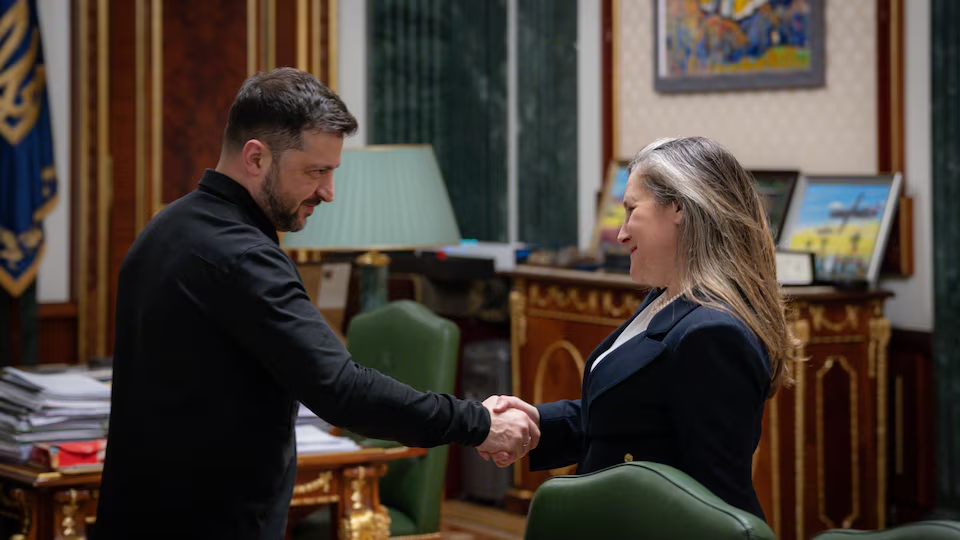
Freeland’s departure follows Ukrainian President Volodymyr Zelensky’s announcement on January 5 that he had appointed the former Liberal cabinet minister as his economic adviser. The appointment triggered immediate controversy in Ottawa, with critics arguing that a sitting member of parliament could not simultaneously serve a foreign government without creating a conflict of interest.
The resignation leaves Prime Minister Mark Carney’s government one seat short of the majority it appeared poised to secure just weeks earlier. In December, the Liberals gained ground when former Conservative MP Michael Ma crossed the floor to join the governing party—following a similar defection by Chris d’Entremont in November. Ma’s move brought the Liberals within one seat of a majority.
Now, with Freeland’s exit, the government finds itself back where it started, at least temporarily.
By-election timeline uncertain.
Freeland represented a traditionally safe Liberal riding, but the seat will likely remain vacant when MPs return to the House of Commons later this month. Parliamentary procedure requires the Speaker to formally notify the chief electoral officer of the vacancy, after which the government has between 11 and 180 days to call a by-election.
With byelection campaigns lasting a minimum of 36 days, plus additional time required to formalize results and swear in the winner, the earliest a new MP could take their seat is late February.
The timing is particularly sensitive given the government’s narrow parliamentary position. Last fall, the Liberals’ main budget motion—a confidence vote that could have toppled the government—passed by the slimmest of margins, underscoring how critical every vote has become.
The government faces at least one guaranteed confidence vote during the winter sitting: a vote on spending estimates that must occur by the end of March. The Liberal budget implementation bill, currently being studied in committee, will also require a third reading vote before advancing to the Senate—another matter of confidence.
More departures expected
Freeland’s acceptance of the unpaid advisory role with President Zelensky, combined with her earlier appointment as Warden of Rhodes House and CEO of the Rhodes Trust, signaled her intention to leave Canadian politics entirely.
She may not be the last to go. Prime Minister Carney hinted earlier this week that multiple by-elections are on the horizon, though he declined to specify which ridings might be affected.
“There’ll be a few by-elections coming up and we’ll run great candidates and the people in those ridings will decide who they want to send to Parliament,” Carney said during a Tuesday news conference.
While Freeland’s seat is currently the only vacancy, reports suggest that British Columbia MP Jonathan Wilkinson and Toronto MP Bill Blair—both former cabinet ministers—are expected to receive diplomatic appointments that would require them to vacate their seats. (Bill Blair is being considered as high commissioner to Great Britain and Jonathan Wilkinson for a European ambassadorship.)
The potential for multiple simultaneous by-elections would further complicate the government’s already precarious position in Parliament, where every vote counts and the path to a stable majority remains uncertain.
PHOTOS:
Volodymyr Zelensky appointed Chrystia Freeland as an economic adviser. Photo Courtesy of Volodymyr Zelenskyy’s Facebook page